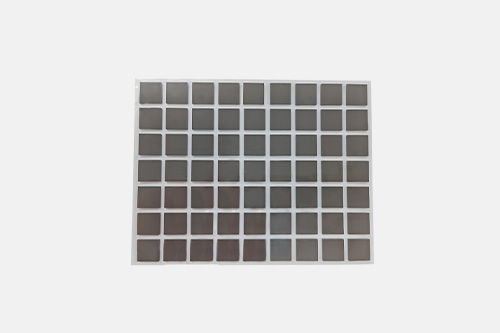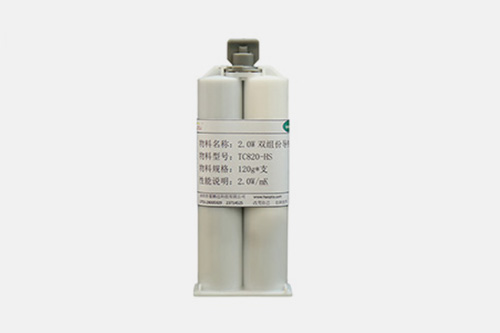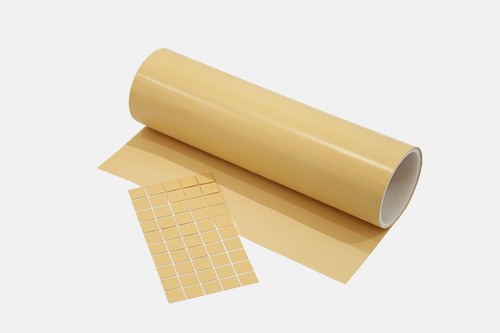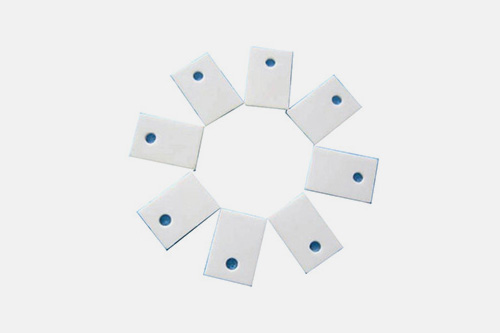
Integrated circuits are widely used in electronic product components. As is well known, high temperature is the enemy of integrated circuits. High temperatures not only cause equipment instability and shorten its service life, but may even burn certain components. Portable devices can also cause harm to the human body. The heat that causes high temperatures does not come from outside the electronic device, but from inside the electronic device or integrated circuit. The function of heat dissipation components is to absorb and dissipate this heat to the inside or outside of the device, which is beneficial for the normal temperature of electronic components.
1. Introduction to the concept, principle, and method of heat dissipation
Integrated circuits are widely used in electronic product components. As is well known, high temperature is the enemy of integrated circuits. High temperatures not only cause equipment instability and shorten its service life, but may even burn certain components. Portable devices can also cause harm to the human body.
The heat that causes high temperatures does not come from outside the electronic device, but from inside the electronic device or integrated circuit. The function of heat dissipation components is to absorb and dissipate this heat to the inside or outside of the device, which is beneficial for the normal temperature of electronic components.
The heat dissipation methods can be simply divided into passive heat dissipation and active heat dissipation
Active heat dissipation: pushing fluid circulation through external force to remove heat
Passive heat dissipation: It is the use of the principle of thermal expansion and contraction in physics, where fluids naturally circulate to dissipate heat or absorb heat using the specific heat capacity of solid fluids to achieve the purpose of heat dissipation.
The heat dissipation methods can be subdivided into heat conduction, heat convection, and heat radiation
1. Introduction to heat dissipation principle and heat dissipation method
Thermal conduction:
It is the phenomenon of heat transfer in a medium without macroscopic motion, where heat is transferred from one part of the system to another or from one system to another. It can occur in solids, liquids, and gases.
Thermal convection:
It refers to the relative displacement (convection) between different parts of a liquid caused by the macroscopic motion of the liquid, and the heat transfer process caused by the mixing of cold and hot liquids. Convection can be divided into forced convection and natural convection. Forced convection is the circulation of liquid caused by external forces. Natural convection is caused by changes in density gradients due to temperature differences, where gravity causes low-temperature high-density fluids to flow from top to bottom and high-temperature low-density fluids to flow from bottom to top.
Thermal radiation:
It is a heat transfer method in which an object emits heat energy outward in the form of electromagnetic radiation. It does not rely on any external conditions.
Thermal conductivity
Thermal conductivity, also known as thermal conductivity, refers to the amount of heat transferred through an area of 1 square meter under stable heat transfer conditions, with a temperature difference of 1 degree (K, ℃) on both sides of a 1M thick material. The unit of measurement is W/(m-k), where K can be replaced by ℃
2. Classification of the Security Industry
Category 1: Front end (collection) devices
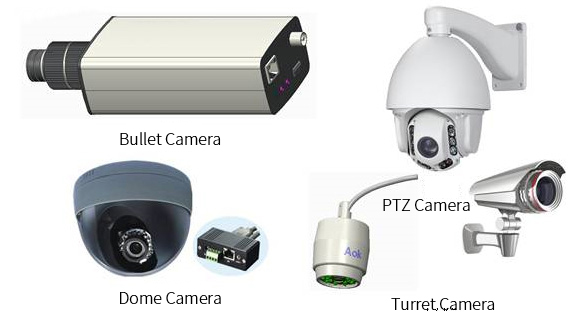
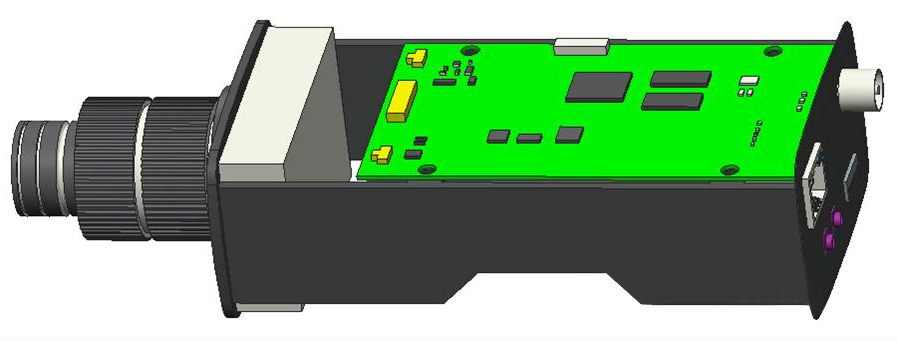
Schematic diagram of the structure of the gun camera
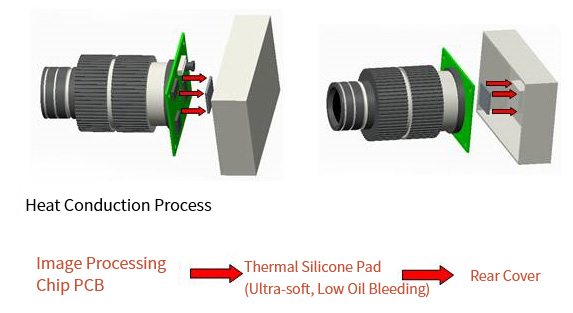
Heat dissipation structure diagram - image processing module
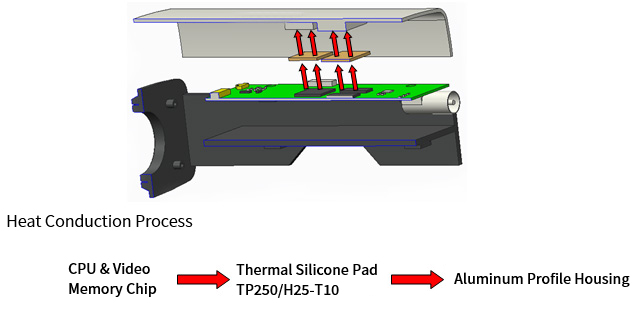
Heat dissipation structure-a board heat dissipation diagram
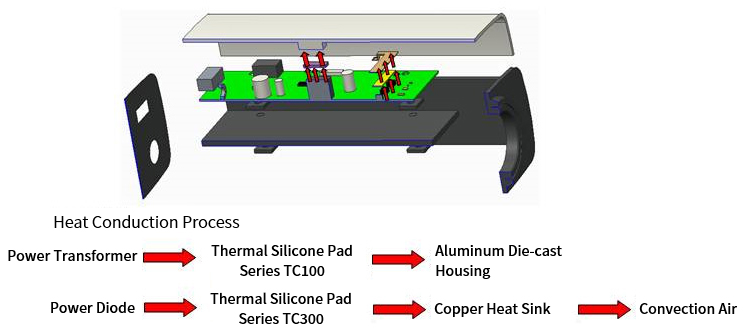
Heat dissipation structure - power board heat dissipation diagram
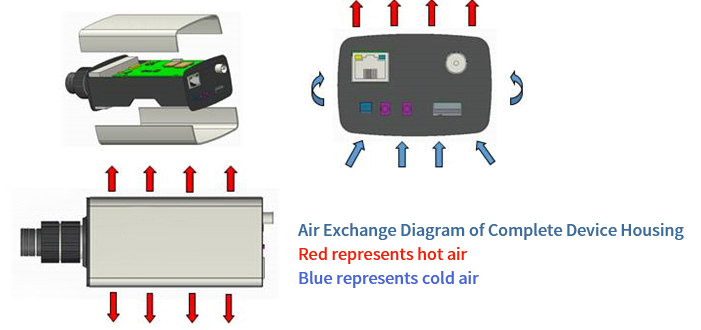
Schematic diagram of shell heat conduction
Schematic diagram of temperature rise
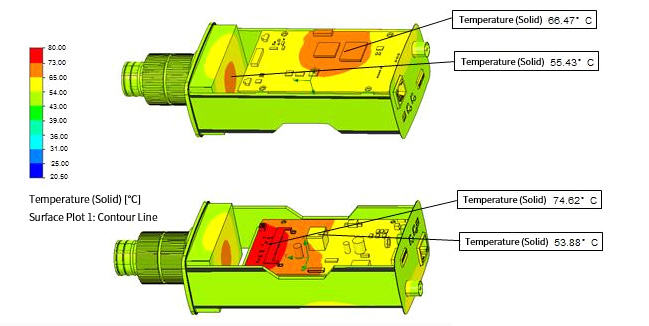
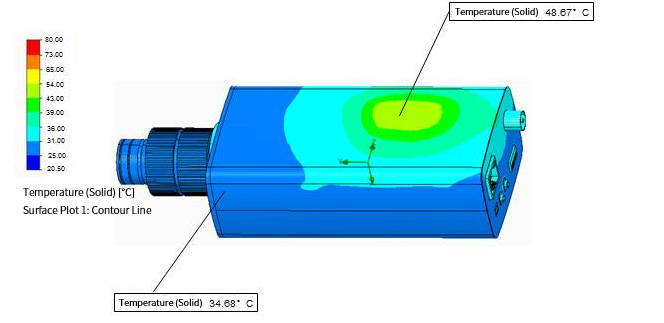
Selection of main heating chip power and thermal interface materials Image processing module
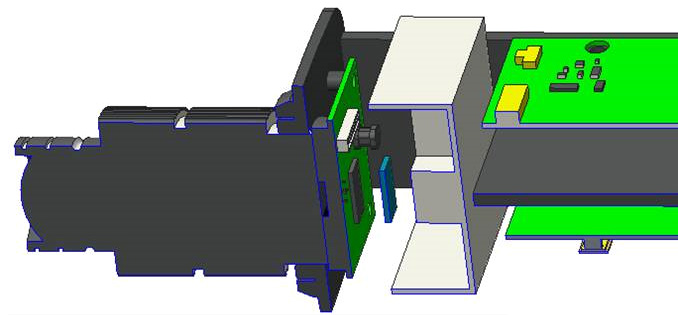
Application Scenarios
Heat source power: 720P-1.0-1.5W/1080P-2.5-3.5W/4K-6W+
Material used: Thermal conductive silicone gasket
Thermal conductivity coefficient of 1.5-6W/m.k
Thickness: 0.5-1.0mm
Breakdown voltage: 6kV
Usage: The PCB image processing module generates a large amount of heat and requires independent heat dissipation. A thermal conductive silicon film is attached to the back pins of the module to transfer the heat from the image processing module to the aluminum back cover for heat dissipation.
Special requirements: Hardness: Shore 00 below 20 degrees, soft material with low oil separation or no silicon material (oil separation penetration will cause pollution to the photosensitive module and affect the image quality). Low volatility test standard: Place a heat-conducting material in a closed beaker and cover it with a frosted glass cover plate. Bake in an 80 ℃ oven for 48 hours without any volatile oil stains.
Main heating chip power and thermal interface material design A board
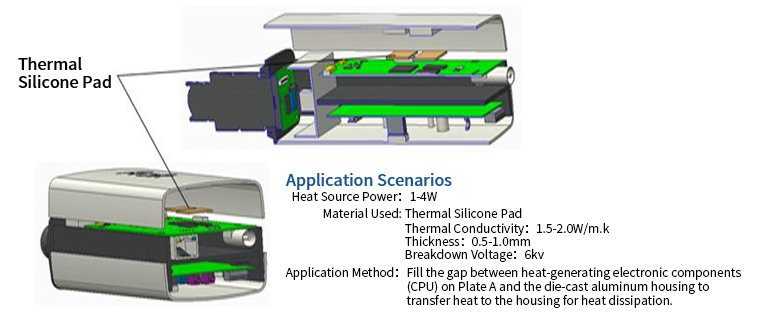
Usage: Fill the gap between the heating electronic components (CPU&memory) on board A and the aluminum die-casting shell to conduct heat to the shell for heat dissipation.
Power board with main heating chip power and thermal interface material design
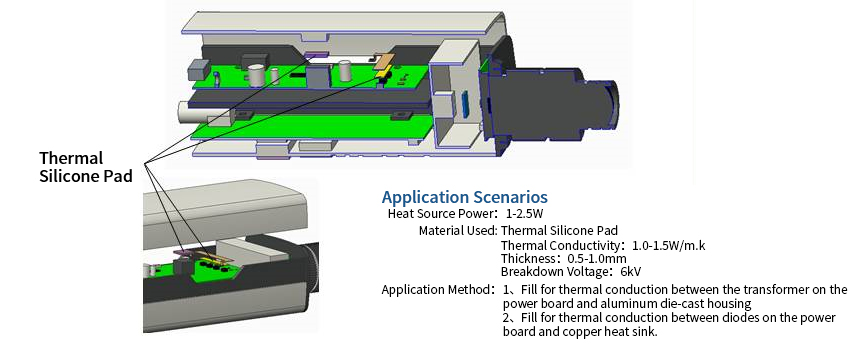
The filling thermal conductivity between the diode on the power board and the copper heat sink.
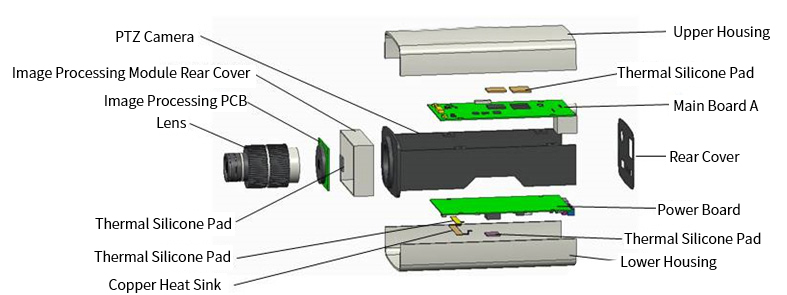
Schematic diagram of the structure of the cylinder camera
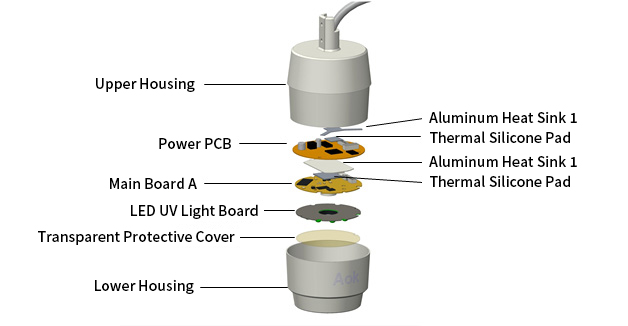
Schematic diagram of heat dissipation structure of cylinder machine
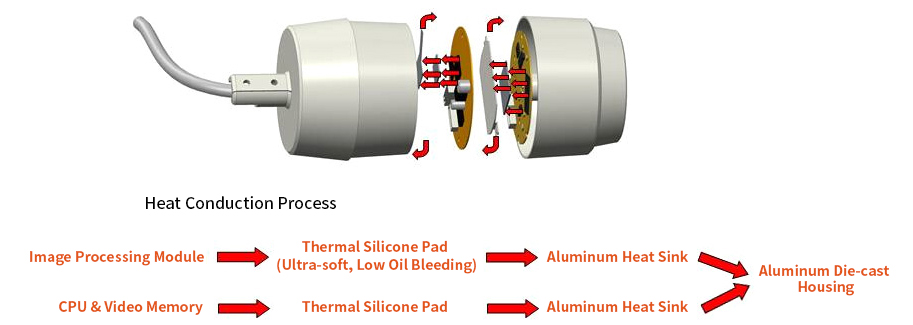
Selection of main heating chip power and thermal interface materials Image processing module
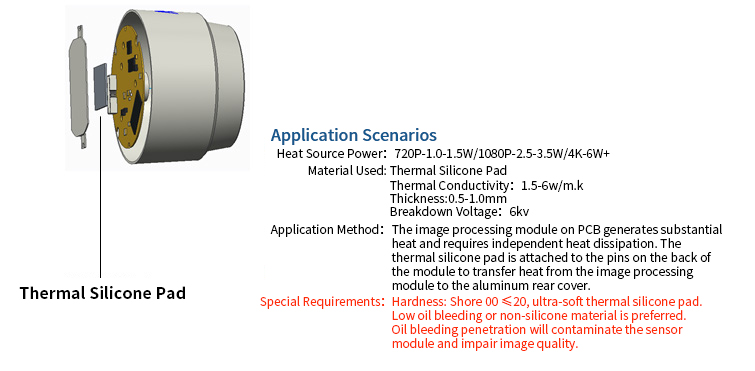
Selection of main heating chip power and thermal interface material A board
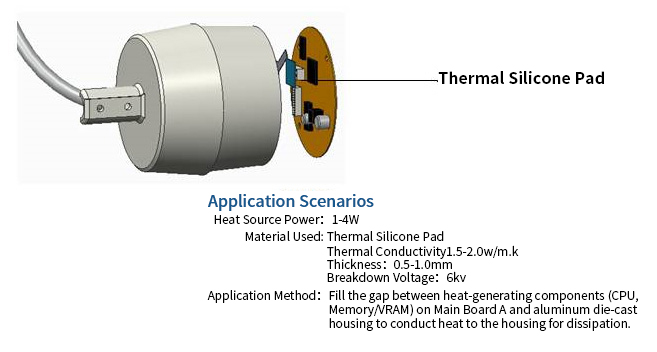
Usage: Fill the gap between the heating electronic components (CPU&memory/video memory) on board A and the aluminum die-casting shell to conduct heat to the shell for heat dissipation.
The future development direction of security products
1: The image processing capability will become increasingly high, and the pixels will become denser
The mainstream 720P cameras are gradually moving towards high-end, high-definition pixels, 1080P, 4K image quality, etc. The demand for thermal interface materials will also increase to 6W-15W, and there will be higher requirements for various aspects such as oil separation of thermal interface materials;
2: Gradually moving towards the direction of de intelligence
Based on the convenience of future data reading and collection, major security equipment manufacturers are gradually introducing cloud storage solutions. Cloud storage has become a trend in the development of future storage. Currently, cloud storage manufacturers are combining various search, application technologies, and cloud storage to provide a series of data services to enterprises;
In this way, data storage devices will move towards larger and higher end servers and hosts, and the demand for thermal conductive materials will be more inclined towards PCization.