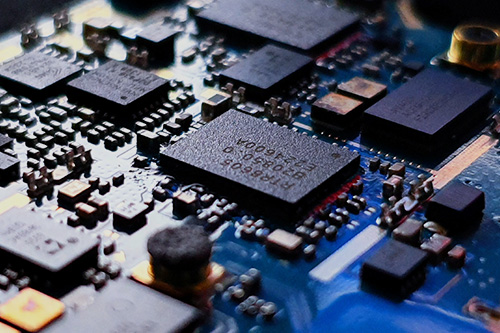
Chip is a general term for semiconductor component products. It is the carrier of integrated circuits (ICs), which are divided into wafers. IC chip, referring to all electronic components, is a circuit module that integrates multiple electronic components on a silicon board to achieve a specific function. It is the most important part of electronic devices, responsible for computing and storage functions. The application scope of integrated circuits covers almost all electronic devices in military and civilian industries. Chipset is the core component of a motherboard, usually divided into north bridge chips and south bridge chips according to their arrangement positions on the motherboard. With the rapid development of microelectronics technology, the size of chips is getting smaller and the computing speed is getting faster, resulting in increasing heat generation. This places higher demands on the heat dissipation of chips. Designers must use advanced heat dissipation technology and high-performance heat dissipation materials to effectively remove heat and ensure that the chip operates normally within the maximum temperature it can withstand.
As shown in Figure 1, a commonly used method of heat dissipation is to use a heat sink, which is installed on the chip with thermal conductive materials and tools to quickly dissipate the heat generated by the chip.
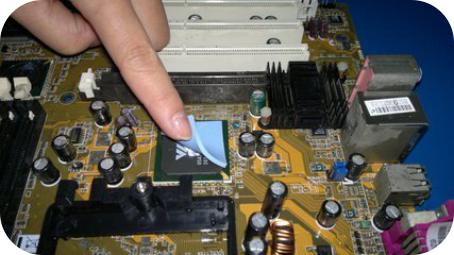
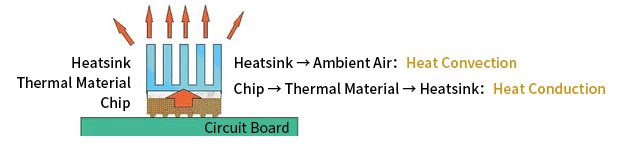
Due to the presence of many grooves or gaps between the bottom of the heat sink and the surface of the chip, all of which are filled with air. Due to air being a poor conductor of heat, air gaps can seriously affect heat dissipation efficiency, greatly reducing the performance of heat sinks and even rendering them ineffective. In order to reduce the gap between the chip and the heat sink and increase the contact area, it is necessary to use thermal conductive materials with good thermal conductivity to fill, such as thermal conductive tape, thermal conductive gasket, thermal conductive silicone ester, thermal conductive adhesive, phase transition material, etc. As shown in Figure 2, the heat generated by the chip is transferred to the heat sink through a thermal conductive material, and then the majority of the heat is carried away to the surrounding air through convection (forced convection and natural convection) by the high-speed rotation of the fan, forcibly removing the heat. This forms a heat dissipation path from the chip, then through the heat sink and thermal conductive material, to the surrounding air.
With the increasing integration of IC chips, the requirements for the heat transfer effect of thermal interface materials have also been raised. Our company has developed professional thermal interface materials for IC chip heat dissipation.
HPD-TC1000 high thermal conductivity gasket, with a thermal conductivity coefficient of 10W/m,. k, high insulation, and a thickness of 1-5mm, can meet high heat dissipation requirements for thermal design.
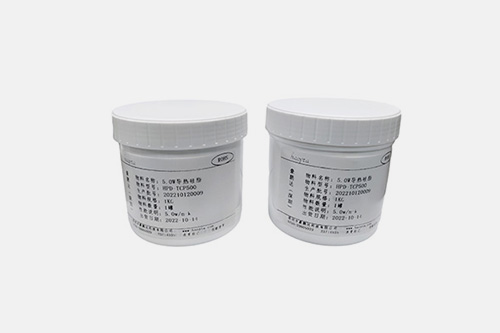
HPD-TC600 thermal conductive silicone grease, with a thermal conductivity coefficient of 6.0W/m.k, easy to apply, no added solvents, will not dry, and has long-term reliability.
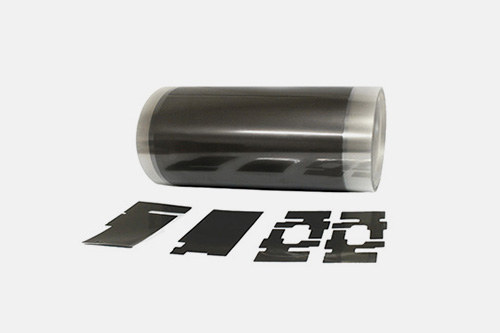
HPT-TCX400 thermal insulation sheet, with a thermal conductivity coefficient of 1.3W/m.k, a thickness of only 0.15mm, ultra-low thermal resistance, high insulation strength, and a voltage resistance of up to 5KV, can withstand screw torque and pressure.
The application fields of IC chips involve computers, televisions, automotive electronics, LED, Switches, solar energy, medical, television, military and other fields.